As New Jersey’s statewide school cellphone ban takes effect this school year, questions about student privacy and school authority are becoming more prominent concerning bag searches for phones and other items.
Students retain constitutional protections against unreasonable searches, but school officials may search a student’s belongings if they have reasonable suspicion that school rules or laws have been violated.
The legal standard for student searches comes from the 1985 U.S. Supreme Court case New Jersey v. T.L.O., which determined that school officials need reasonable suspicion rather than probable cause to search student property.
Probable cause is when there is enough evidence to reasonably believe a crime has been committed or that evidence of a crime will be found. Reasonable suspicion is a lower standard when there are specific facts or circumstances that give an official reason to believe a student may have violated a school rule or the law.
Del Val’s Supervisor of Security, Safety and Student Conduct, Ariel Gilbert, said students should understand that schools must balance privacy rights with school safety.
“Using that reasonable suspicion, if there are banned substances, weapons or things like that, it gives the authority of the administrator to go into a bag, backpack or pockets to identify if there’s a threat in the building,” Gilbert said.
Students always have a right to refuse a search. However school officials can still search the bag under certain circumstances, meaning refusing a search does not necessarily prevent it from happening. If there is reasonable suspicion, school officials may still be permitted to search a student’s bag.
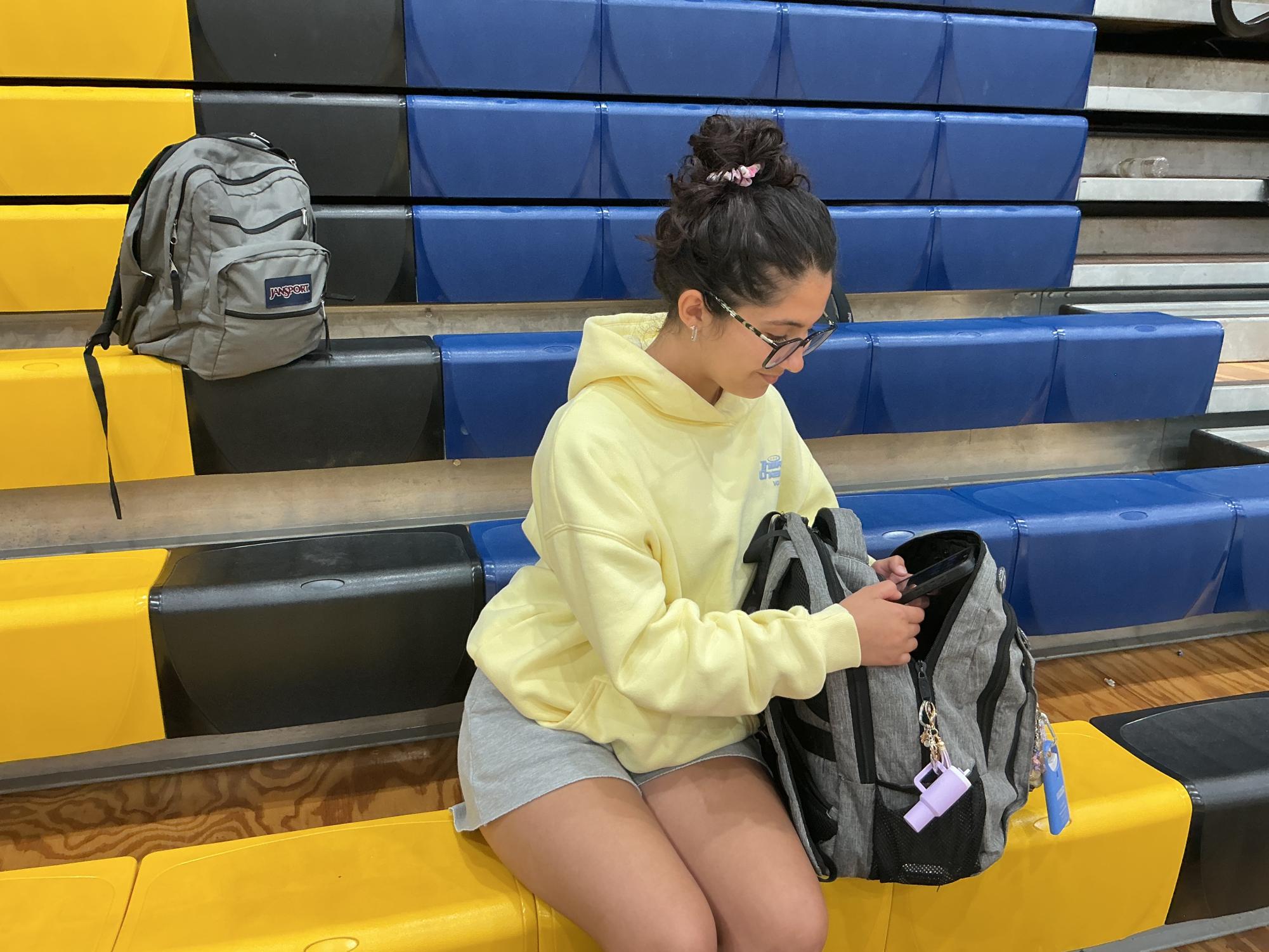
For example, if a teacher sees a student constantly reaching towards their bag or repeatedly looking into it, that gives the teacher reasonable suspicion and could trigger an administrative search of the student’s bag.
With New Jersey’s school cellphone ban now taking effect, some students and parents have raised questions about how this policy will be enforced.
“The intent of it is not to open backpacks every day and look for cellphones — that would take hours,” Gilbert said. “The expectation is that it should be in your locker. If it’s not in your locker, you take a risk of a consequence.”
Gilbert assures that the new change appears more intimidating and strict than it actually is.
“I think the students think that it’s gonna be like this huge, drastic change where it’s gonna be like policing over the students, but once students sort of get their routine down, I think that they’re going to realize that there really isn’t too much of a difference,” Gilbert said.
Several weeks into the school year, students are beginning to see how the phone ban and the potential for bag checks affect their daily lives.
“I wish that we really sat down and defined what reasonable suspicion is,” sophomore Mia Domingo said. “There are many different cases and different variables to it. You never know what it’s going to be.”
Students are now experiencing the effects of the ban, from changes in classroom routines to communication with their families.
“I normally text my dad, like, when to pick me up after practice,” sophomore Mason Patkochis said. “I can’t do that anymore without having to go to the office. It’s just really frustrating.”
As the year continues, students and staff will continue adjusting to the new expectations, although the transition will take time.
“Phones are just such a big part of our community,” Domingo said. “It’s like a big way to bring us all together, especially in a society where so many of us are picked on for being different.”
Students can review the bag search and phone ban policies through the online student handbook.