

























































At the start of 2025, changes in trade policy had a widespread impact on businesses across the country – but few felt this impact more than small restaurants, including those local to the Del Val community. Donald Trump’s renewed tariffs have raised costs, placing unwanted burdens on small businesses already operating with thin profit margins.
In March 2025, Trump imposed a 10% tariff on all countries, as well as a higher tariff on countries that have a larger trade deficit with the United States. The Trump Administration framed these tariffs as beneficial for domestic manufacturing and an increase in border security measures.
These tariffs are highest in China, originally set at 145% before decreasing to 30% following the U.S.-China Tariff deal. The Canadian tariff rates sit at 35% for all products. But what does this mean for U.S. citizens and business owners?
Small restaurants and businesses have been hit hard. They were the victims of these new trade policies. While these tariffs were framed to benefit America, that is not the case.
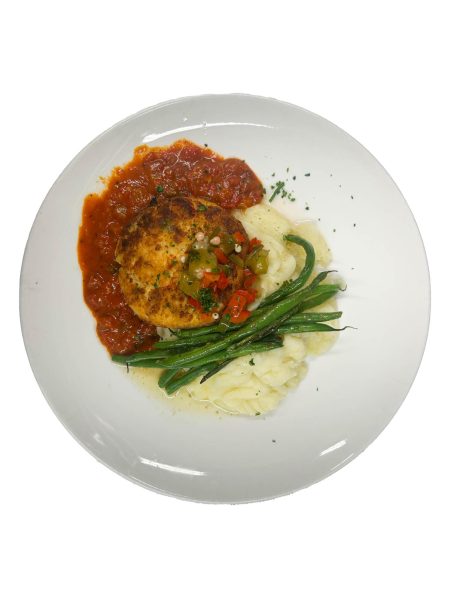
“Looking at just seafood, a lot of crab meat comes from China,” Daniel Gras, the owner and chef of Chez Daniel in Frenchtown, said. “We don’t get crab meat from China, but because China is the number one provider of crab meat, when their prices increase, that causes prices to increase across the board.”
Chez Daniel is a French fusion restaurant located in the heart of Frenchtown, NJ. There, Gras handles everything from new specials to ingredient sourcing.
Tariffs are hurting small businesses with already tight profit margins. The cost of food alone has led restaurants across the country to increase prices, explore new sources for ingredients or eliminate items from their menu entirely.
Tariffs placed on China don’t just affect the consumers of Chinese products because China is a major source of many imports. When they raise prices, so does the entire market for that particular item. This puts pressure on small restaurants’ tight budgets to pay for this competitive pricing.
“Even if tariffs were not put into effect, prices went up in anticipation of tariffs,” Gras said.
Whether or not Trump implements these tariffs, prices will continue to skyrocket in potential fear. These words cost small businesses and their customers.
The added cost per U.S. household because of the tariffs on Chinese goods is expecte to add $329 annually. This is because of the added cost to things, from iPhones to the restaurants dishes.
Locally owned restaurants and businesses in the Del Val area are not excluded from that. Dining out costs more, and that is not the fault of the owners, but the tariffs. Dishes might increase in price or disappear because these restaurants need to make a profit.
Chez Daniel has felt this impact. Gras explained that certain items’ prices have risen and, because of that, other items, such as halibut, have to stay exclusive to specials due to varying increased pricing. The issue that comes with this is that these restaurant owners have to tiptoe the thin line of making a profit and keeping customers.
Next time you go out to eat, stop to wonder why certain things have changed and realize this is not due to the owners. Tariffs have and will continue to hurt small businesses, including your favorite hometown restaurants.

Liz Peck • Sep 4, 2025 at 1:39 am
Please fact check prior to publishing articles like this. There are many contributing factors to the rising cost of crab meat. Due to global warming there has been a steady decline in the crab population. Labor costs have also increased greatly as well as fuel & shipping. These increases started in 2020 and have steadily climbed since then. The relationship between tariffs and prices is not straightforward. While tariffs can impact costs, they are just one factor among many. The interplay of supply and demand, market conditions, and other external factors must be considered to understand price changes fully.
while Trump’s tariffs may have some impact, attributing the rising cost of crab meat solely to these tariffs overlooks the broader context of economic, environmental, and market factors that are also at play.
When writing a piece like this besides doing your own independent research and fact checking you should also interview someone with the opposing view to get a well rounded piece.
Since you want to write an article about tariffs have you done your research on economics? Do you have any idea how many businesses and industries have left the US in the last 30 years? Unfortunately the United States has become reliant on countries like China, India & Thailand for food, consumer goods and pharmaceuticals. This is very dangerous, we need to be independent and self sufficient. Do you realize why China can make everything so cheap? Have you looked into their labor laws?Do you have any idea of the little amount of money the workers make? Or their human rights violations? Do you have any idea the amount of jobs lost in the US due to outsourcing to foreign countries because companies can pay pennies on the dollar for cheap labor . Do you have any idea the amount of poverty and famine this causes? The only ones getting rich off the items we import and the jobs we outsource are the governments and the Jeff Bezos’s of the world. We need to bring industries back to the US soil to boost our economy, create more jobs and be more independent instead of lining foreign government officials and billionaires pockets.