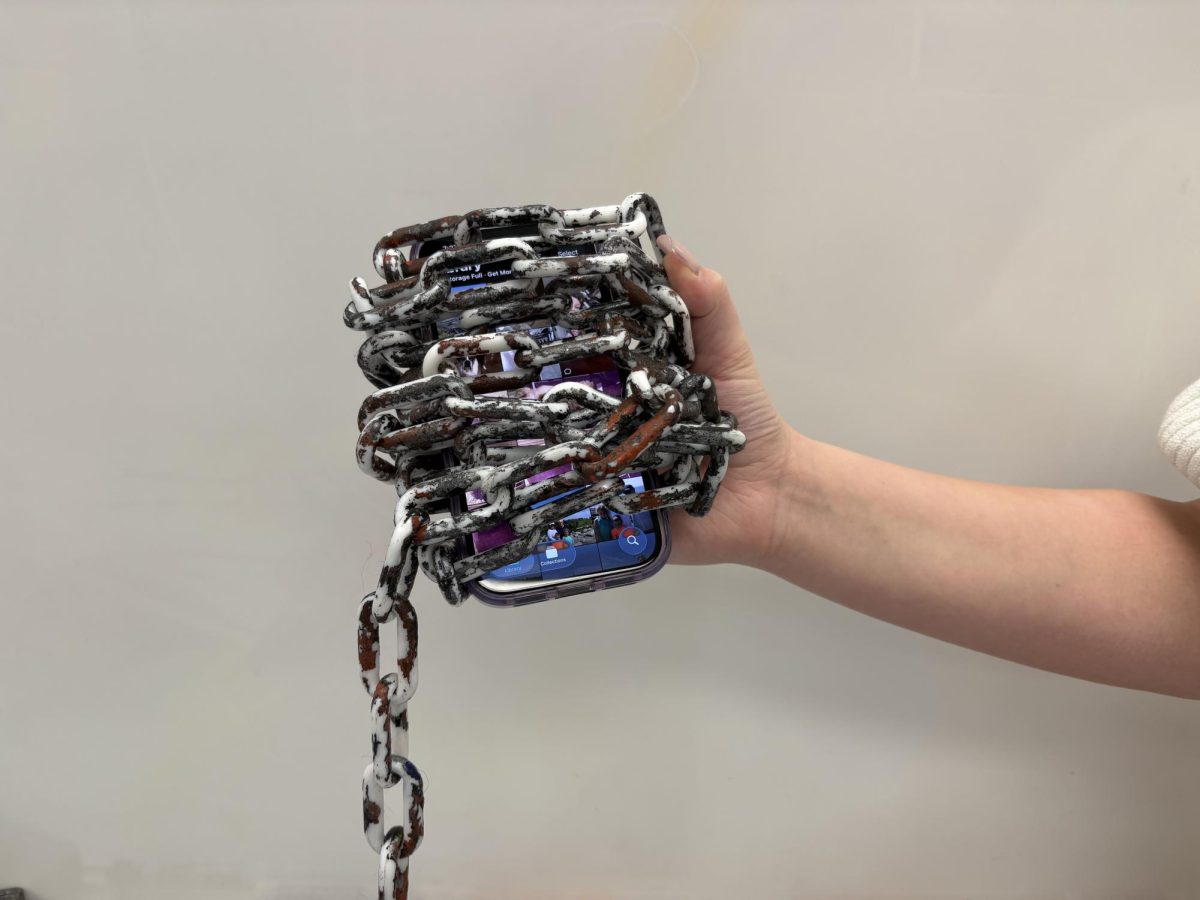














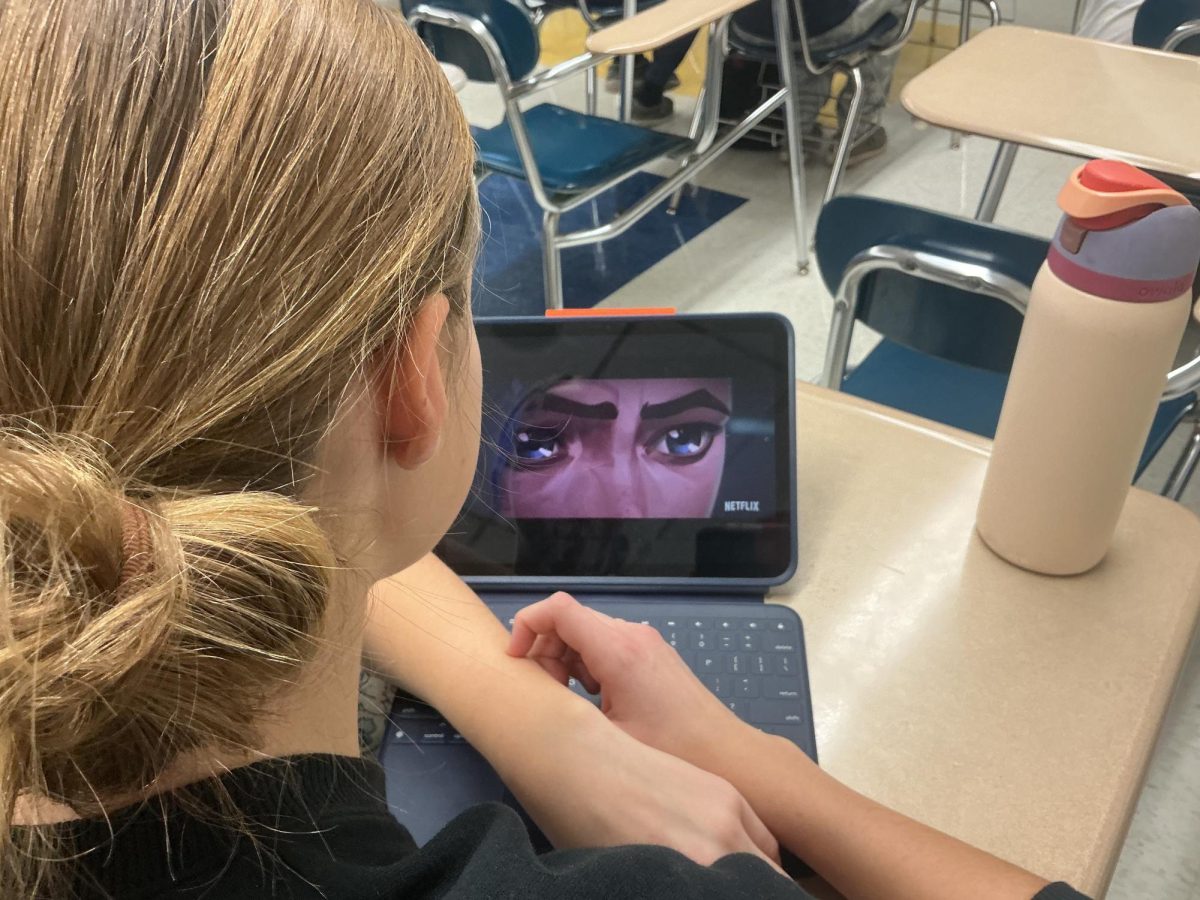

























Del Val rolled out a new, stricter cellphone and Bluetooth device policy at the start of this school year.
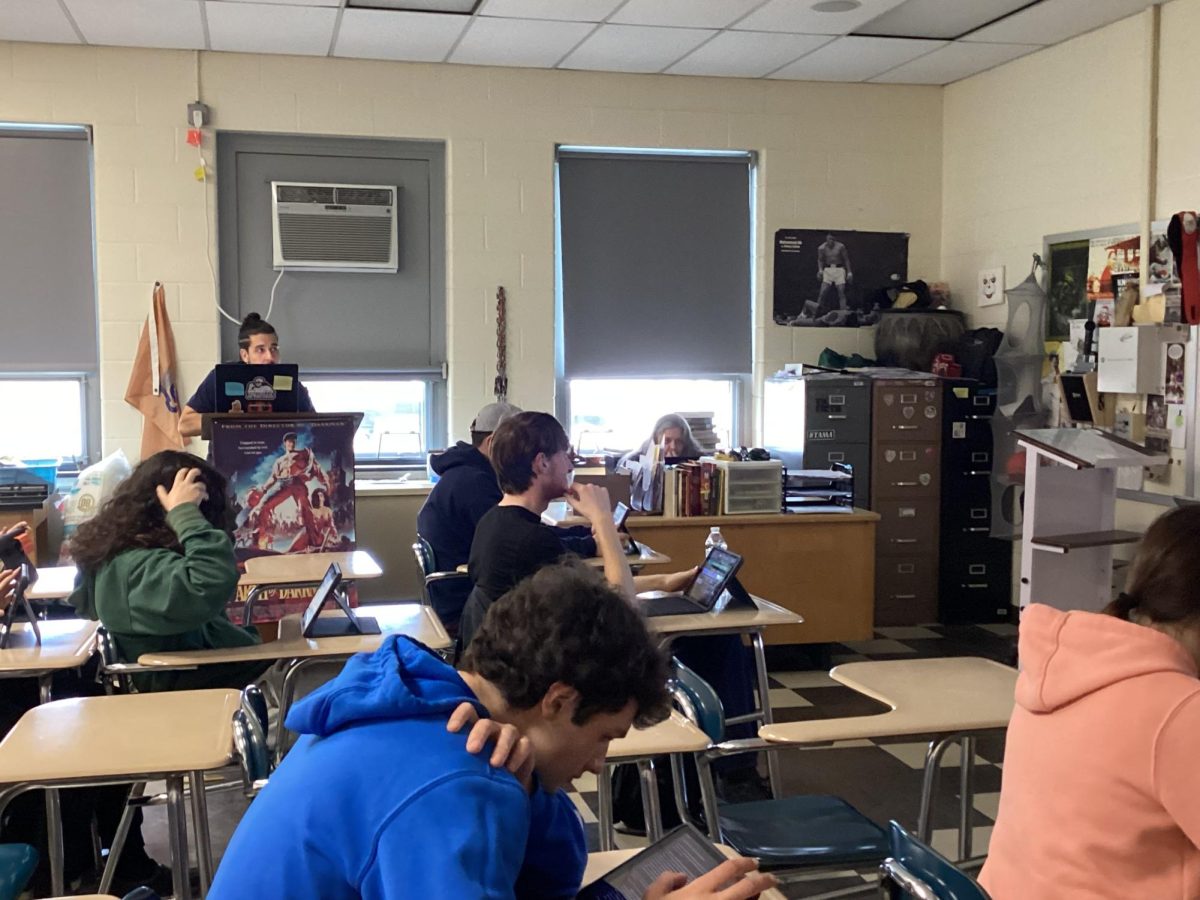
With this new policy, students are only permitted to use their personal devices during passing periods, unit lunch and study hall. This policy switched from how it was in previous years, where teachers were allowed to dictate cellphone and Bluetooth device usage within their class. Now, the same policy is enforced in all classrooms.
Ariel Gilbert, Del Val’s supervisor of security, safety and student conduct, was instrumental in building the new policy which makes the device expectations the same from classroom to classroom.
“I think when you have all individuals doing their own thing, there can be some benefits of that as they might be implementing something that’s very comfortable for them,” Gilbert said. “But when there is a collective blanket policy right across the school, there is a better clear understanding.”
Kaitlyn Donnelly, a Del Val paraprofessional, has personally experienced improvements within the classroom after the new policy was enforced. She found that there have been far fewer behavioral issues regarding cellphones after the policy was put into place.
“I’m not yelling as much for students to put their phones away, which is nice,” Donnelly said. “I’m not arguing with students about why they need to put their phone away and I’m not getting the excuses of why they need to have their phone out.”
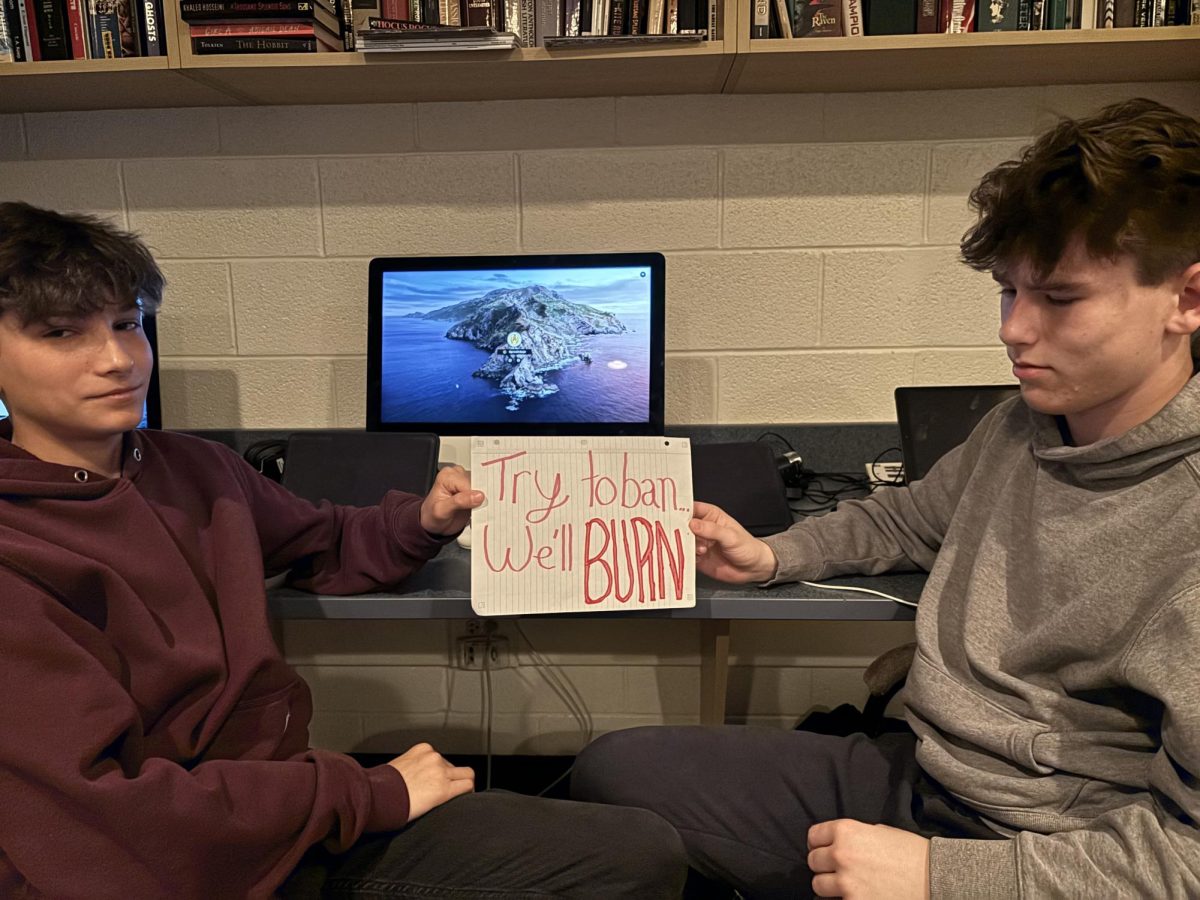
When it comes to the students’ perspective, many have their grievances with the harsher restrictions. Del Val junior Maya Malloy, opposes the new policy.
“I think it’s too strict at this point,” Malloy said. “I feel like I should be allowed to check the time on my phone if I want. I feel like we grew up in a generation where we are always holding our phones so it’s kind of like a habit to just look.”
Malloy was one student who felt the impact of the policy directly, as she was written up for cellphone usage in class.
“I was in class, and I looked at the time on my phone and then he [my teacher] wrote me up,” Malloy said.
Malloy felt this was unfair due to the nature of the situation, as she only glanced at her phone at the end of class when no teaching was being done and she had no assignment that needed to be completed.
“I wasn’t disrupting any teaching,” Malloy said. “It wasn’t like a sound blasted from my phone. I was just minding my own business.”
Other students have also experienced issues with the new rules, specifically with the Bluetooth device restrictions.
Junior Madigan McGourty expressed how using her AirPods during independent work was something that helped her focus, but now she is unable to do.
“I like to be able to focus directly on just what I’m doing with no other background noise,” McGourty said.
In a noisy classroom environment, listening to music can help students block out distractions and allow for students to complete their work more efficiently.
Although students are allowed to use wired headphones with a school device, McGourty noted several challenges that come with the change.
“The school blocks certain songs I want to listen to, and I already have my playlist set up on my phone,” McGourty said. “I don’t want to have to change it. The wired headphones are really inconvenient. They break easily and they don’t sound as good.”
Gilbert explained that the stricter policy comes from a place of more than just preventing distractions, but also in an attempt to better support students in the classroom.
“Whenever you’re in an academic environment and able to receive outside communication, it’s not only a distraction, it can cause different types of issues,” Gilbert said. “If a student receives a notice of a potential issue with family, things like that, and they’re in the middle of a class — let’s say they get emotional, that teacher is in front of a number of students trying to give support but can’t.”
Instead, the family should contact the school directly, who will then contact the student and provide them with a better environment for them to find out the information.
“I understand not having them [cellphones] in classes, but if there’s something going on at home I’d like to be able to know,” McGourty said.