













































In this transition from fall to winter, New Jersey has experienced unexpected cold temperatures and extreme weather, and the culprit? Climate change.
Climate change is an ongoing issue that has been impacting the world for centuries.
As climate change progresses, its intensity follows in an exponential pattern, causing its effects to become detrimental.
According to scientists, the cause of these extremes are a result of the eroding ozone layer. Stacy Grady, Del Val’s AP Environmental Science teacher and head of the science department, explained what occurs when the differences in hot and cold temperatures become more drastic and frequent.
“Extremes are becoming the norm as a result of the decrease in temperature gradient from the equator to the poles,” Grady said.
The polar jet stream and polar vortex are being affected by UV radiation being trapped in the Earth’s atmosphere and hitting the stream. As the UV radiation hits the surface of the jet stream, it heats up, causing the stream to fluctuate.
“The bends in the polar vortex look like the top and bottom parts of a rollercoaster rather than in a straight line,” Grady said.
The polar jet streams are losing strength causing the boundaries to weaken which results in the colder temperatures to leave the poles. This all has ultimately brought intense weather to various parts of the US, including areas that do not typically experience winter conditions.
“As the jet stream slows down, the polar vortexes are going to come and stay for longer,” Grady said. “That’s when we start seeing temperature changes that aren’t necessarily related with the typical season.”
Other results include high winds and consistent heavy precipitation during the winter season, which NJ has been experiencing. This can be referred to by the term “La Niña,” and, when this occurs, certain areas can be susceptible to face drastic weather conditions.
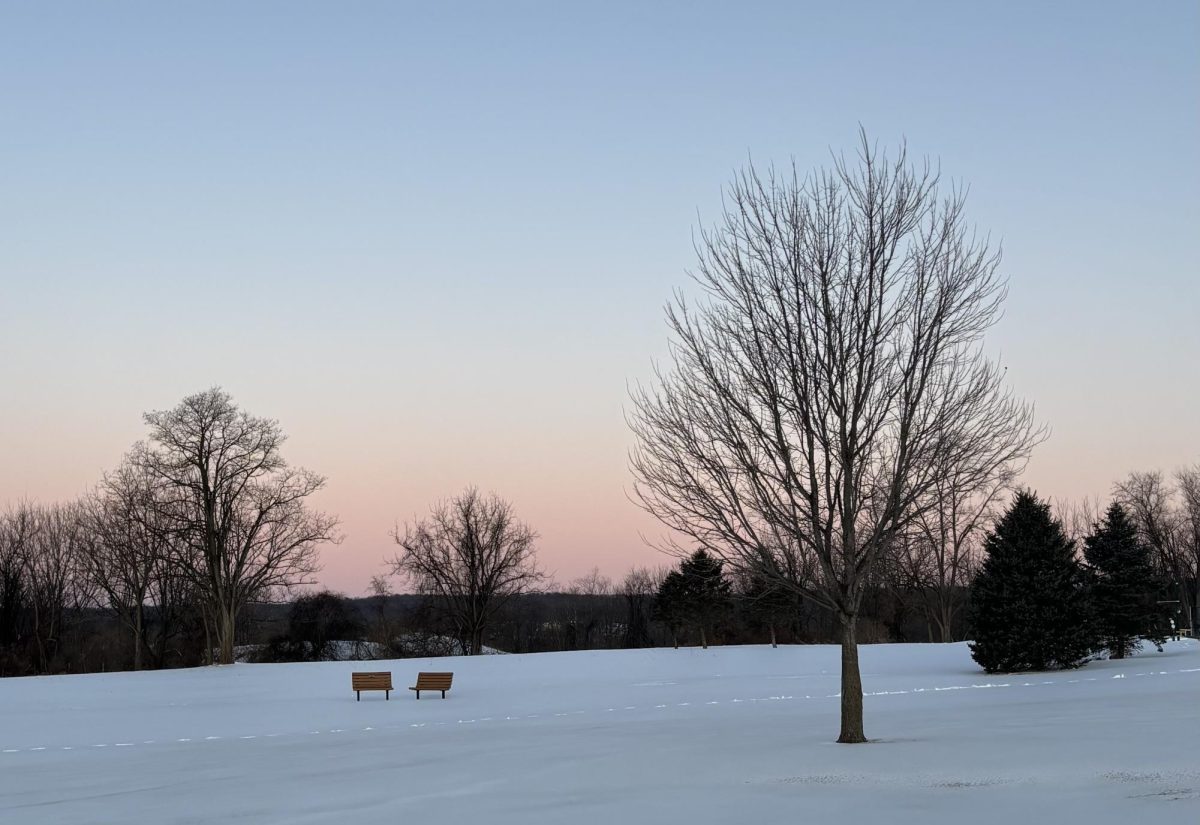
On Jan. 24, NJ was met with a strong winter storm that came with heavy snow and ice causing residents to stay home as it was advised to stay off the roads. Governor Mikie Sherrill even set a state of emergency for that weekend.
Though a storm is not unusual for these months, NJ has experienced more snow fall this winter than in the most recent years with long lasting low temperatures.
“Changes in climate patterns are creating changes in weather patterns,” Grady said. “The Earth has a lot of natural systems to help balances these irregularities but humans are shifting the balance of the system to extremes.”
When this balance is interrupted, weather patterns become abnormal ultimately changing how the seasons are presented leading to unpredictable conditions.