
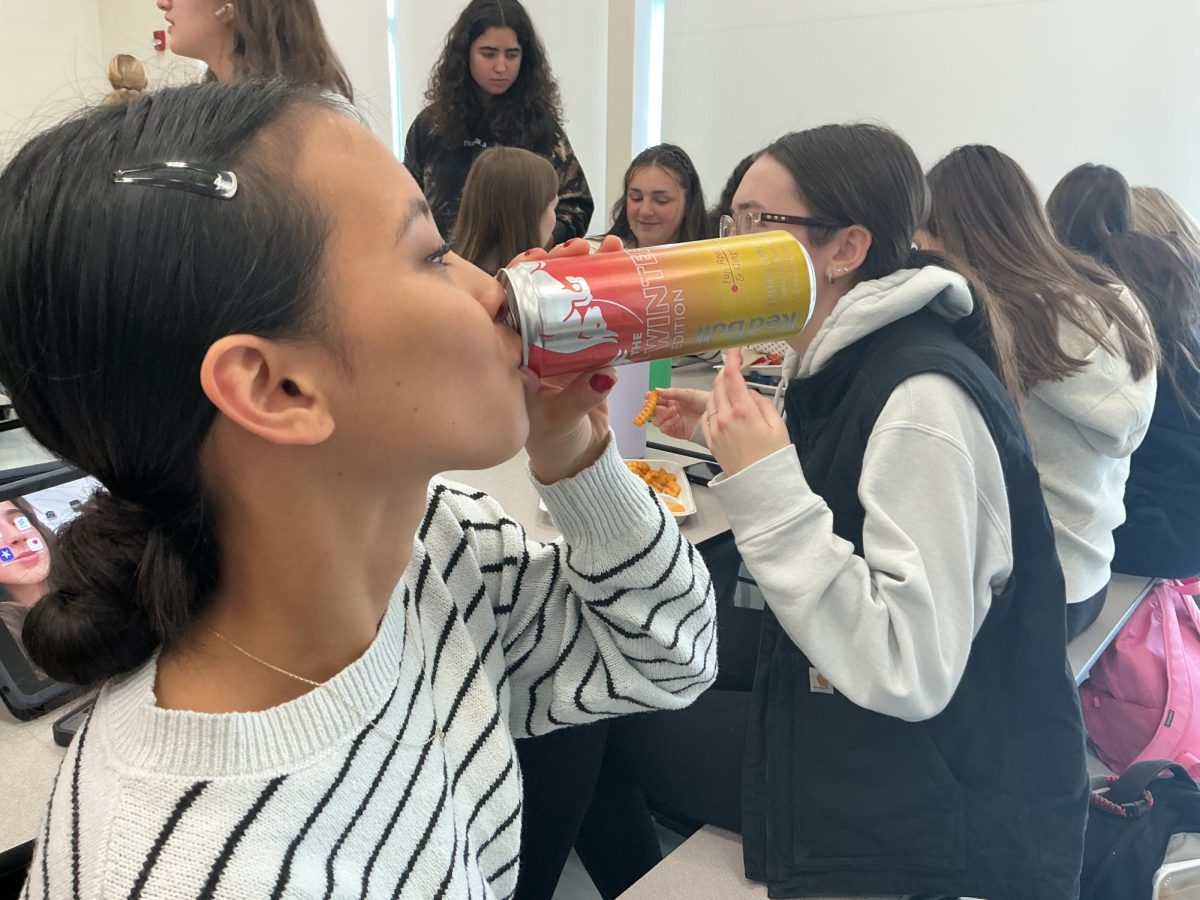














































In the past few years, studies have shown that grabbing an energy drink has become second nature to many teenagers, but why?
With up to 50% percent of young adults drinking them everyday, it’s clear that energy drinks have increased in popularity.
Most people who hear about energy drinks know that they contain large amounts of caffeine and sugar, which gives the consumer the energy boost they want. Sophomore Clare Cook noted that she experiences this.
“I just feel like it’s a better start of my day,” Cook said. “I’m feeling more energetic.”
In addition to energy drinks having the ability to elevate the consumer’s overall mood, they can also strengthen endurance in physical activities. As a result, there’s been an increase in usage by student athletes.
“I drink them to get energy throughout the day,” Tanner Donruma, a sophomore and wrestler, said. “Or sometimes to get energy for big matches and stuff.”
It is advised that the youth should consume less than 100 milligrams of caffeine daily. However, a single energy drink can contain more than 200 mg. Drinking caffeine everyday causes the body to crave it. Senior Taylor Negrin described her caffeine withdrawal symptoms.
“I’ll get really bad headaches, but I’ll just drink other forms of caffeine,” Negrin said.
Allysa Catalla, a senior, related to Negrin’s struggles.
“I feel like if I don’t drink energy drinks for the day it’s going to make me feel like something’s missing,” Catalla said.
As of right now, energy drinks have become students’ main energy source. Over time, these stimulants can become addictive.
“Once you get used to your first dose, you want to keep taking it,” Adria Hedden, a Del Val paraprofessional, said.
To attract younger audiences, brands like Monster, Alani and Celsius have utilized social media to increase their popularity.
“I feel like TV and social media have a lot of ads promoting them,” junior Carly O’Cone said.
The vibrant designs of the cans create a more appealing look for teenage consumers. The bright colors and variety of flavors distracts the buyer from looking at the labels.
“I just breeze through the labels; I don’t really pay attention to that stuff,” Donruma said.
Seeing their peers and friends with energy drinks also influences student’s decisions to purchase energy drinks. Negrin describes how self-advertising these drinks are because people see them around so much.
“You see the cans and everybody’s walking around with their Alanis and Celsius,” Negrin said.
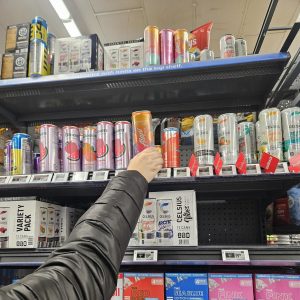
With the rise in energy drink promotion, students gain easier access to caffeine. Energy drinks can be sold anywhere including supermarkets, convenience stores, fast-food chains and online retailers.
“I’ll usually grab one at like, Quick Check or Walmart on my way back from work,” Luke Dougherty, a senior, said.
With this, consuming large amounts of caffeine is not healthy for teenagers as it can cause anxiety, fidgeting and sleeping difficulties.
“I’m already feeling the effect because I get headaches all the time, heart palpitations and my heart hurts a lot,” senior Amy Dolores said about her experience with the side effects of energy drinks.
The more energy drinks that students consume on an everyday basis, the higher they are at risk of expressing these sorts of effects.
“I would like to say that if you drink caffeine daily, try to drink it less because it is very unhealthy for you and it’s going to affect you in the near future,” Catalla said.