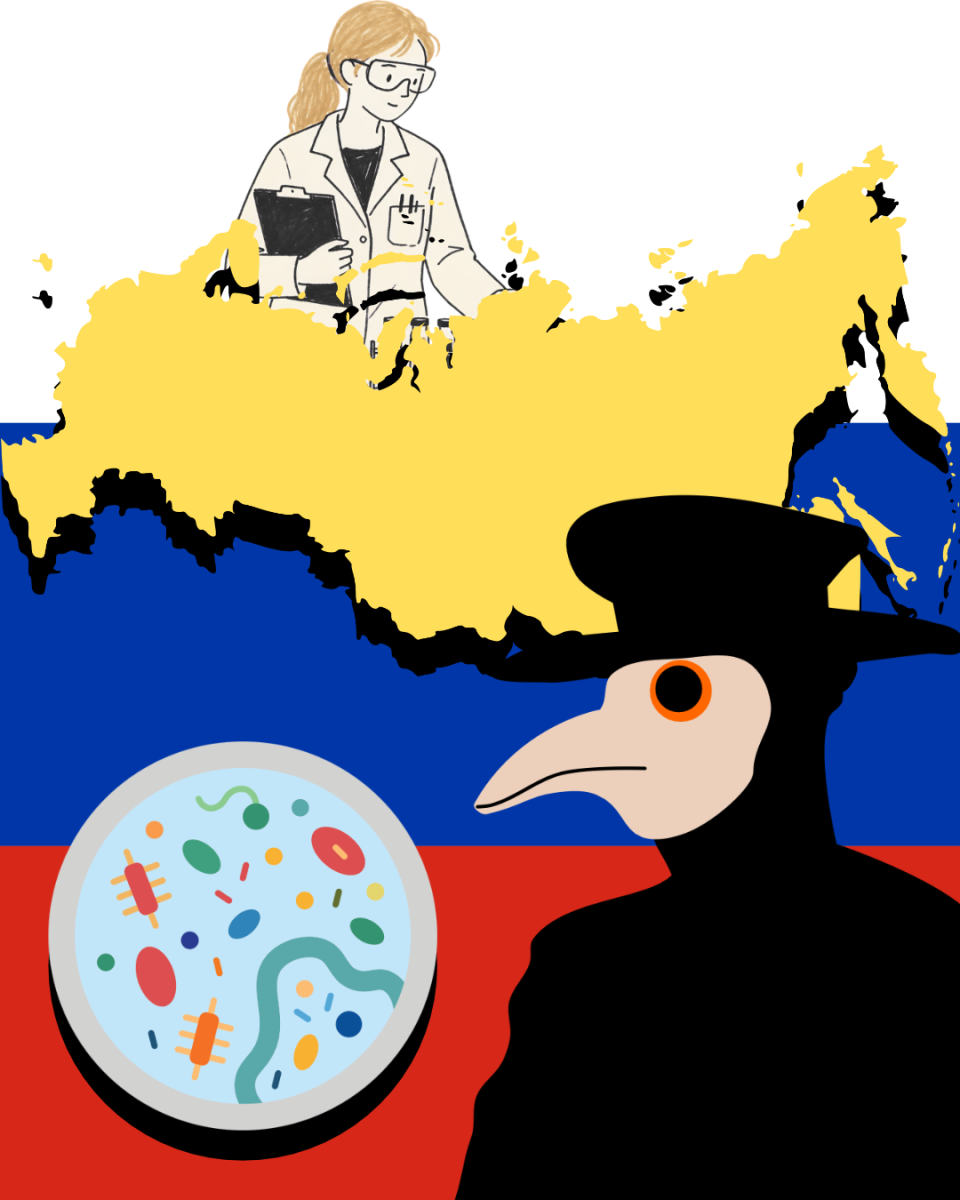












































































An outbreak of the Pneumonic Plague struck the Southeast part of Russia inside the Irkutsk Oblast Region. The outbreak occurred at the Irkutsk Anti-Plague Research Institute of Siberia and Far East in late Sept. So far, one person has died, and over 200 workers from the institute have been ordered to quarantine in their homes.
Even though the United States is asking for answers, the Moscow Government reports vague and incomplete information.
The World Health Organization says the risk for catching the plague is extremely low and it’s unlikely for the disease to spread even further. Dr. Tedros Adhanom Ghebreyesus, the director of WHO, explained that the organization will need clearer information.
Darya Shipilova, a 28 year old woman who worked at the Irkutsk Anti-Plague Research Institute of Siberia and Far East, died from the Pneumonic Plague on Oct. 2.
An article from PBS by Pavel Stepnov, a Russian journalist based in the Irkutsk Region, explains that Shipilova had broken a test tube that carried the disease. Being in close proximity of the disease led to her death.
However, the article was contested by Svetlana Shipilova, a medical professional and Shipliova’s mother. Shipilova stated that she doesn’t believe the rumors about her daughter. She explained to Glubina, a Russian media outlet, that the test tubes in that lab are high quality and difficult to break.
People who have been infected by the disease require immediate medical attention. To prevent the disease from quickly spreading in their lungs, the patients are treated with oral antibiotics and IVs. If not treated within the first 24 hours of contracting it, the disease can be fatal.
The Delphi interviewed ten individuals about the outbreak. Out of the 10, two knew information about the plague, another two knew of its existence and the other six knew nothing about it.
There are three main types of the Pneumonic Plague: bubonic, pneumonic and septicaemic. The Bubonic Plague was likely the one responsible for the Black Death that spread through Europe in the 1350s.
The Black Death was spread around Europe by infected fleas and rodents. Because humans, fleas and rodents interacted with each other daily, the disease became highly contagious. Side effects of the illness include fever symptoms, weakness and buboes.
As of this publication, there has been no more reported deaths or cases of the Pneumonic Plague in Russia. The U.S. is still on close watch, and has been carefully monitoring anyone coming into the country from Russia.