












































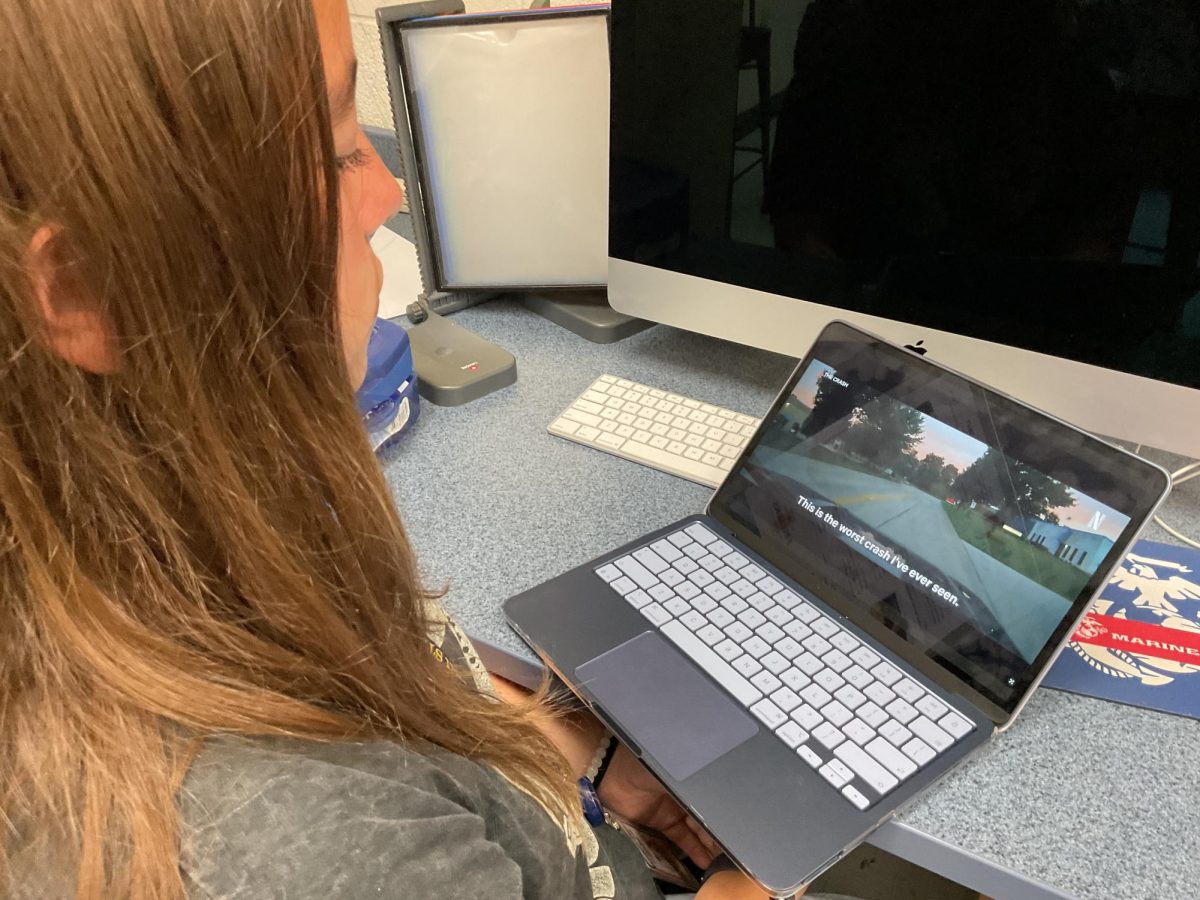















Imagine being watched every time you stepped out of the house. Everywhere you turn, there are eyes on you. Street corners, public spaces, your neighborhood and now, even while driving on the road. Many women don’t have to imagine this, as this is their reality. Women have long faced challenges when going out in public and what little privacy they have is slowly being taken from them. As automatic license plate readers and wider surveillance systems, give their information to unsafe and possibly abusive men.
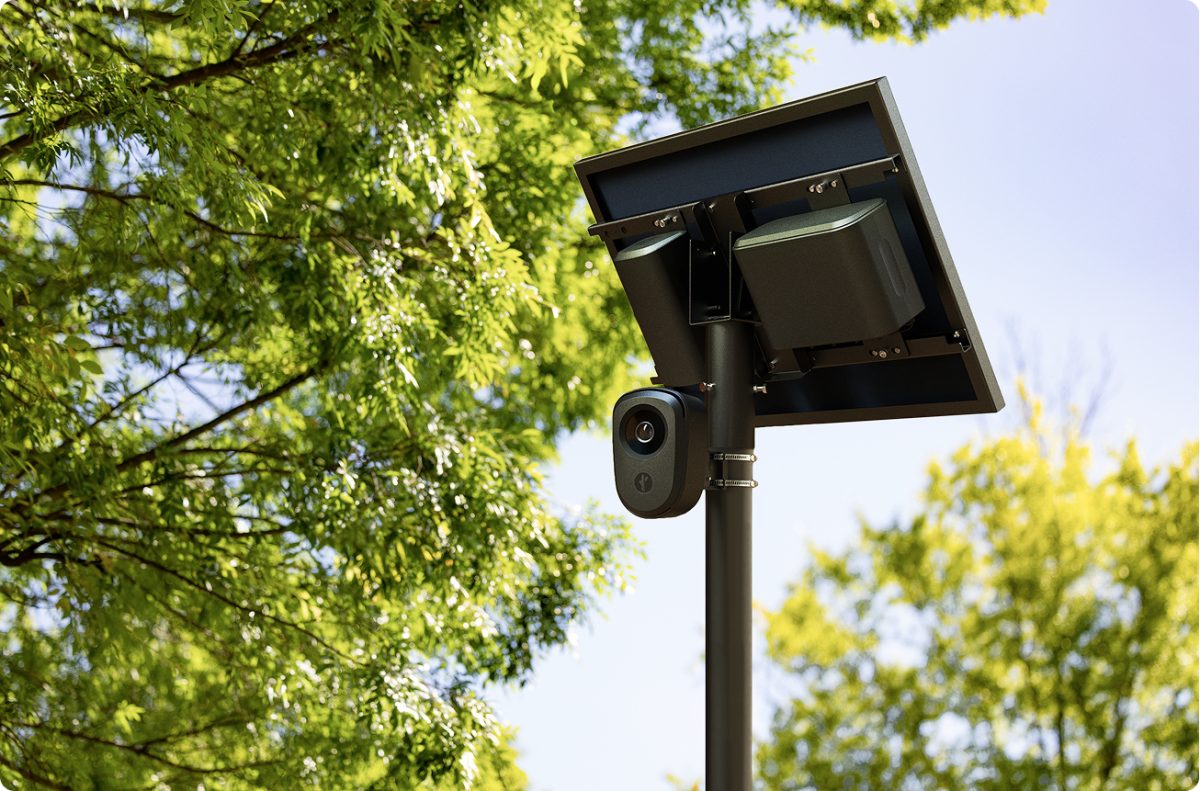
Flock cameras are automatic license plate readers or ALPRs. They function by capturing data: plate numbers, location of the car and the date and time the picture was taken. Though the license plate is the main focus, it also captures the car and sometimes the driver inside. That data is then uploaded to a single computer server analyzed by AI, that can be monitored by anyone with access to the server.
“I don’t think we should be using AI for things like this, because AI will never be able to pick up on mistakes as quickly as humans can,” Junior Samantha Calabro said. “We as humans change our minds and opinions quicker than AI can keep up with, this way AI will never be able to be on the same level as we are.”
This type of surveillance technology is not new, as the first LPR was developed in Britain in 1979, and has evolved and spread worldwide. Generally, police surveillance is not dangerous. In fact, cameras deter crimes, like burglary, by up to 50%. Public safety is very important, cameras and LPRs are a great way to not only solve crime, but prevent it.
Flock prides itself on the fact that their security cameras are making a difference in solving crimes. Flock reports that 100,000 missing persons were found using Flock cameras, as well as 20% of cases in areas with Flock cameras were solved with Flock cameras.
Flock cameras and surveillance networks at large can do a great job preventing and solving crimes. However, mass surveillance can also do real damage to regular citizens when put into the wrong hands.
“I do feel that it’s necessary in some places and situations, but the fact that it’s everywhere now freaks me out a bit. Like who knows where all this stuff is going you know?” junior Naomi Cantilina said. “Part of me thinks only big corporations and the government should control them, and not let people use them personally, like Ring cameras. But at the same time, I don’t want the government listening to me, that’s creepy.”

Flock cameras store data for a minimum of 7 days, though it can go up to 30. However, some fear that once the footage is recorded, it doesn’t go away that easy.
“The media is everywhere, and it’s so wild. People don’t live personal lives anymore. No video, picture or voice note is safe. Once it’s out there it’s out there forever, even if you delete it. Creeps are out there and they will find it,” Cantilina said.
Flock camera data falling into devious people’s hands is not a bridge we can burn once we get there. A police officer in Houston, Texas, was arrested and charged with 2 felonies for stalking his ex-wife for months for putting trackers in her car and following her location with Flock cameras. That is not an isolated incidents, at least 50 cops have been charged for using ALRPs like Flock cameras to stalk women. In the wake of these incidents, websites like Have I Been Flocked? have been created to tell individuals if their license plates are in the Flock database.
“I’ve heard of stories of how male cops have used them to stalk women, so automatically I’m uncomfortable with it. It’s weird knowing all someone has to do is scan your car and all of the sudden they know everything about you,” Calabro said.
Women all over the world are taught how to keep themselves as safe as possible when in public. Classes and weapons are constantly updated and sold to those looking for even more protection. However, with how fast technology is evolving, it’s becoming harder for women to adapt at the same pace. Since these incidents, Flock has updated its security policies, though the changes were minimal and women all over still live in fear.
“It gives women another thing to worry about when going out alone. As girls we are raised to protect ourselves from a young age, this is no different than a man following a woman down an empty street alone. The only difference is that with the data that flock cameras scan for, it makes it 10 times easier to find anyone, and any information about them,” Calabro said.
ALPRs are not a bad idea in theory. A web of cameras that capture almost every angle of any given place all of the time can be great of solving crimes. Unfortunately, no matter what protections are put in place, women will never be fully safe in a public spaces. From what we’ve seen, cameras made by companies like Flock have already hurt women, and will continue to do so.
“If they [Flock cameras] have to exist, in order to make their products safer for women and minorities, they should limit the amount of data collected, add more security and protection to said collected data, and completely eliminate data collection bias,” senior Evangeline Sciancalepore said.
Maps of Flock cameras have also grown common, as a way for those weary to see where they are being watched and how often.
“Flock cameras should just not exist at all. It’s giving real life dystopia, 1984 [the novel] vibes,” Sciancalepore said.